
Aidlink IMS: Humanitarian Logistics & Impact Management Architecture
1. Executive Summary
Managing logistics in crisis zones demands a supply chain platform that goes beyond standard commercial inventory tracking. Aidlink serves as an enterprise-level Inventory Management System (IMS) specifically engineered for the humanitarian aid sector. It is designed to secure funding, enforce operational compliance, translate complex logistics data into quantifiable human impact, and unify distributed field teams through real-time communication protocols.
2. Industry Challenges Addressed
Humanitarian organizations face unique, high-stakes operational bottlenecks that commercial software and legacy methods fail to resolve:
- The Spreadsheet Paradigm & Data Fragmentation
Field workers typically depend on fragmented, static Excel sheets for shipment tracking. This practice generates "ghost inventory," hinders real-time teamwork, and prevents the establishment of a unified source of truth. - Security Vulnerabilities & Shrinkage
Valuable aid moving through volatile areas remain vulnerable to theft, looting, and unauthorized routing without strict, system-enforced guardrails. - Communication Silos
Operational communications often occur on third-party messaging apps like WhatsApp or Signal, separating crucial logistical context from the official shipment records. - Quantitative Impact Reporting Deficits
Major institutional donors require clear visibility into the human impact of their financial support, rather than just freight volumes. Translating raw logistics data into these metrics manually demands massive administrative effort.
3. Enterprise-Grade Security & Compliance Framework
Given the highly sensitive nature of humanitarian data (such as beneficiary sites, aid transport routes, and donor information), the platform is constructed on a strict "Zero-Trust" security architecture.
- Geographic Ring-Fencing (RBAC)
Aidlink automatically cross-references a user’s designated geographic zone with the physical site of a warehouse before allowing any distribution. For instance, a staff member stationed in Sudan is programmatically restricted from dispatching goods located in Syria, neutralizing the risk of unauthorized cross-border actions. - Maker/Checker Authorization (Segregation of Duties)
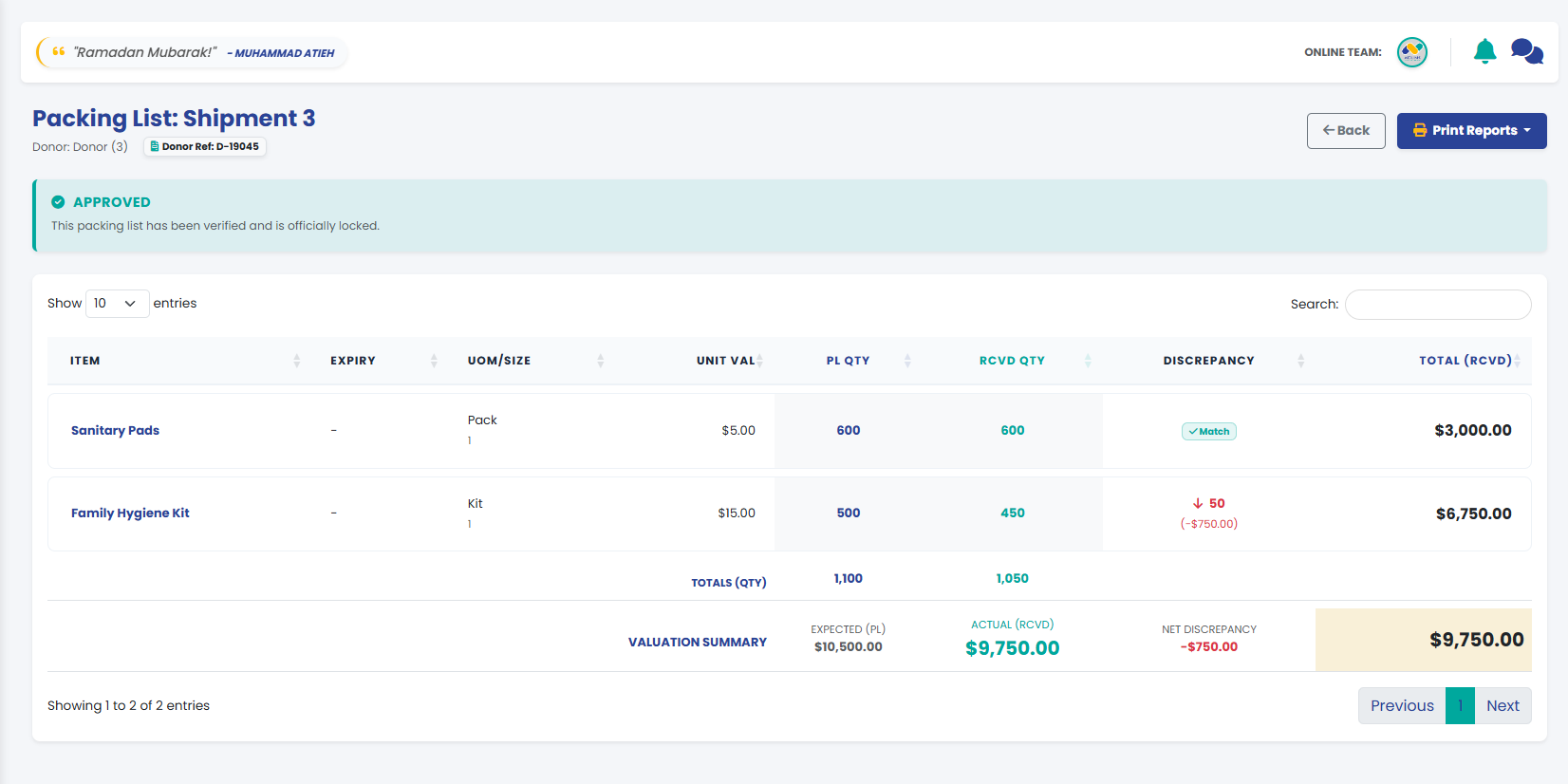
Shipment packing lists follow a rigid state-machine progression (from Draft to Pending to Approved). The actual distribution is locked until an authorized Supervisor formally reviews and secures the record. Keeping the packing role separate from the authorization role significantly cuts down on inventory shrinkage.
- Immutable Activity & Audit Logging
All major actions (like creating shipments, approving documents, or removing records) are permanently captured along with the user's ID, exact timestamp, and IP address. This guarantees complete audit preparedness for internal compliance checks and donor reviews. - Military-Grade Disaster Recovery
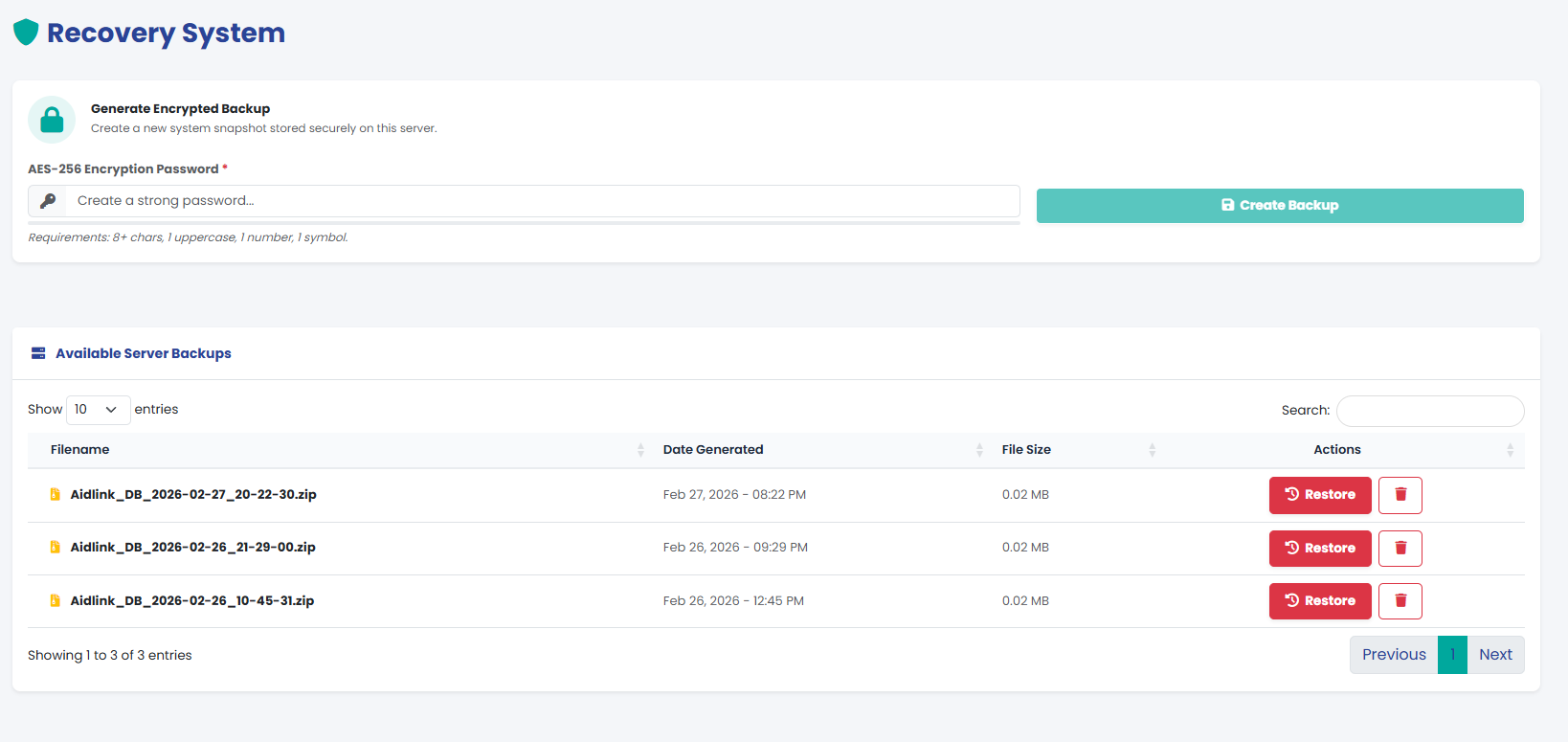
An exclusive recovery dashboard empowers administrators to create full SQL database backups. These files are compressed, safely housed in an .htaccess-secured folder, and protected by AES-256 military-grade encryption enforced by strict password policies.
- Enterprise Database Protection
At the code level, Aidlink strictly utilizes PDO Prepared Statements for every database transaction, making SQL Injection attacks virtually impossible. We also utilize secure session handling to prevent session hijacking.
4. Comprehensive Reporting & Analytics Suite
The software eliminates weeks of manual paperwork by providing real-time, automated reporting tools built for both internal supply chain oversight and external donor clarity.
- Automated Humanitarian Impact Analytics
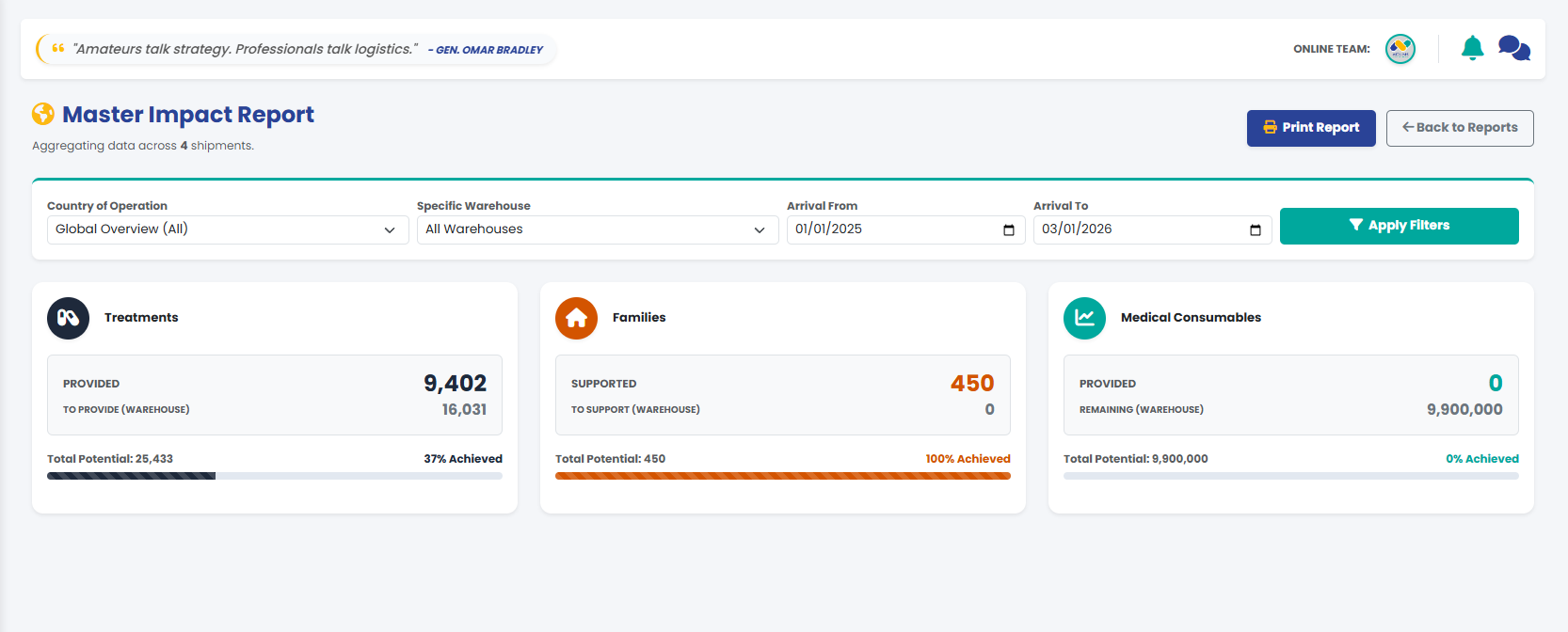
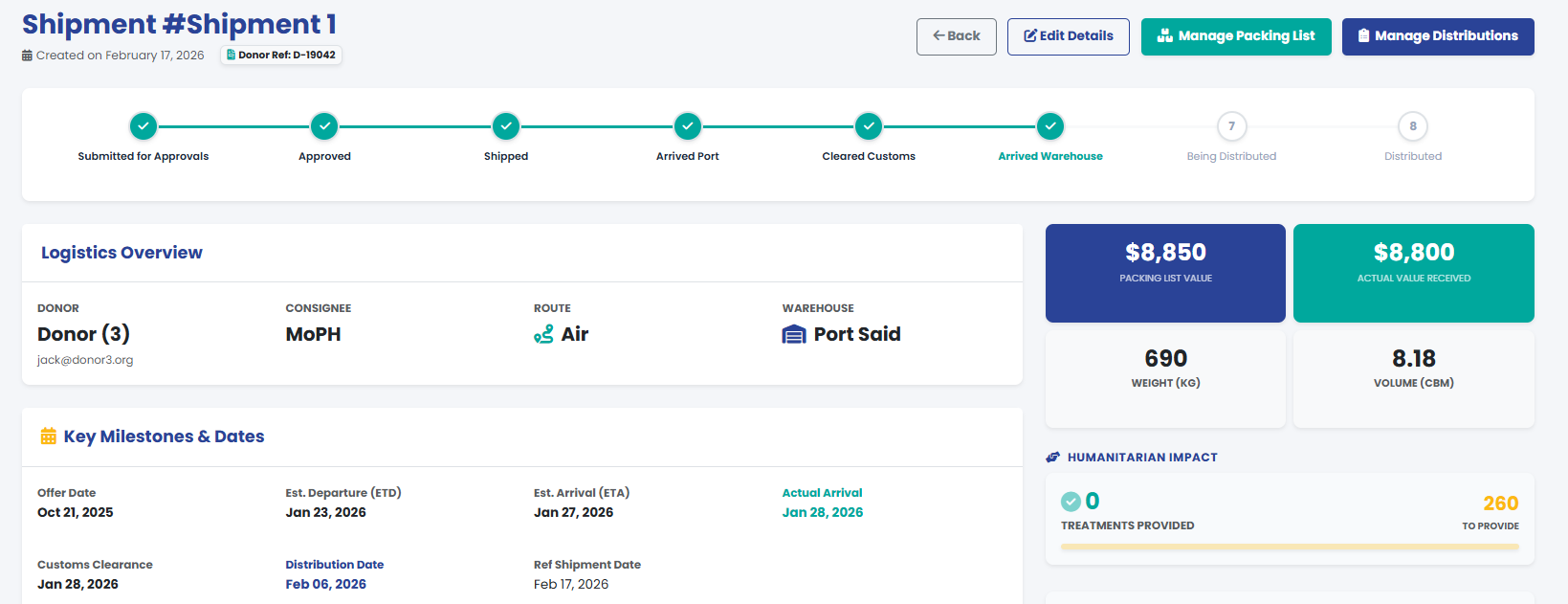
Inventory is organized into Medical and General Relief categories. Upon distribution, the software automatically converts logistical quantities into human impact figures (such as calculating the exact number of "Patients Served" or "Meals Provided" based on defined clinical dosages, or quantities distributed).
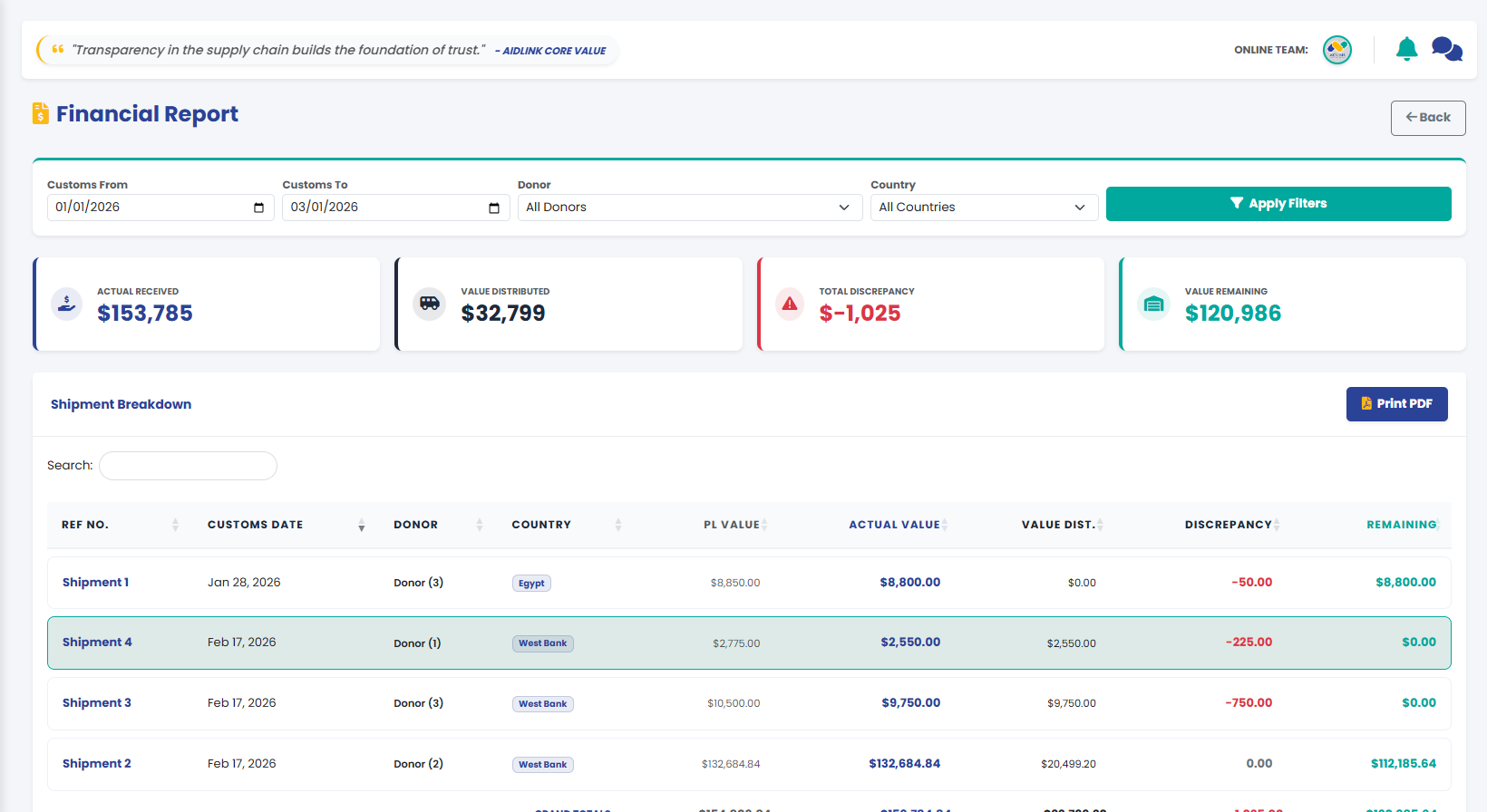
- Financial Valuation & Discrepancy Reports
The platform utilizes a dual-ledger approach to compare "Expected Packing List Quantities" against "Actual Received Quantities". It produces automated Discrepancy Reports that immediately calculate the financial impact of missing or damaged cargo, facilitating quick write-offs and insurance processing.
- Master Directory PDF Exports
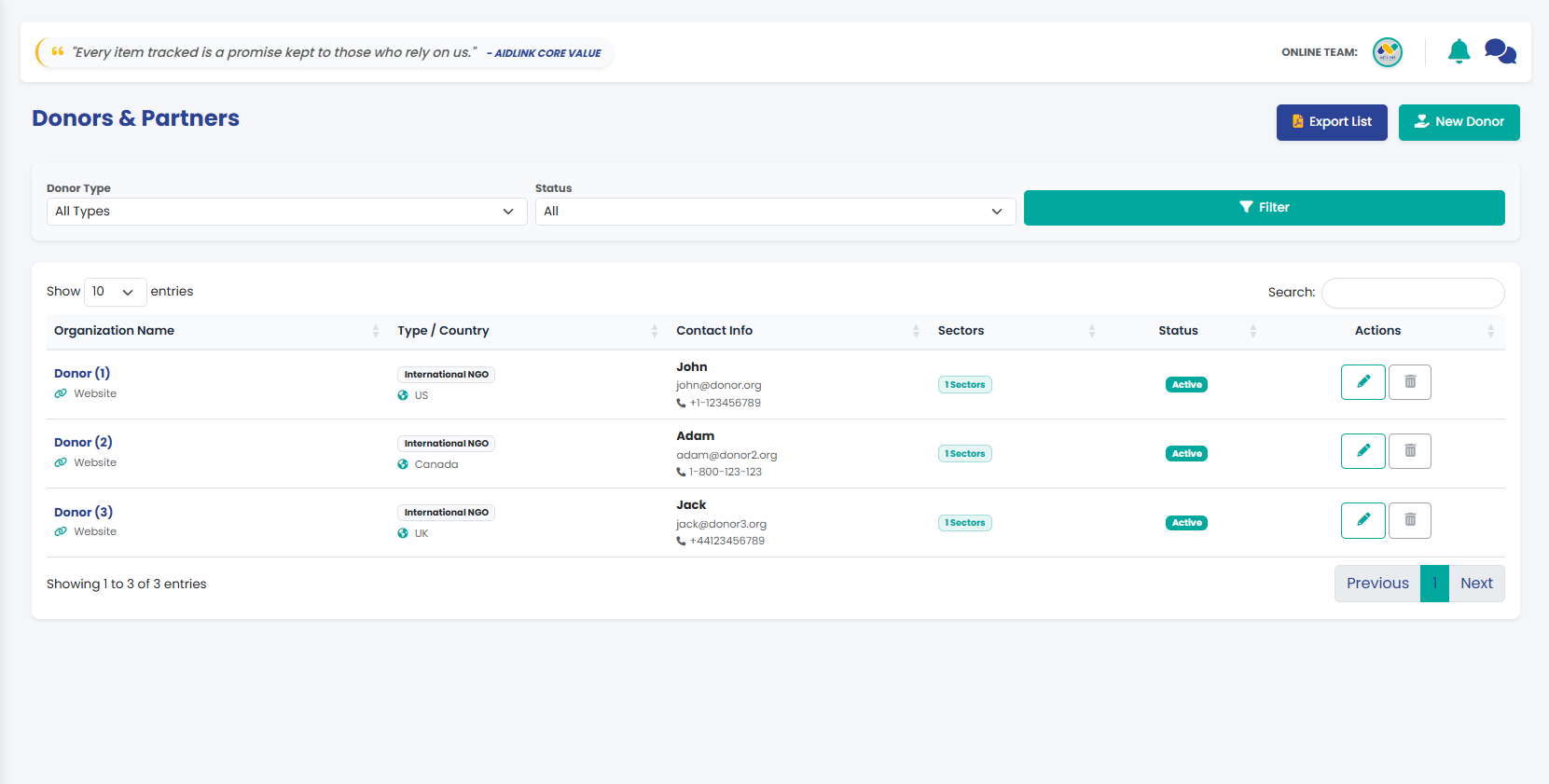
Using built-in vector PDF generation tools, managers can quickly download clean, branded, and timestamped Master Directories for Warehouses (detailing capacity and current utilization) and Donors/Recipient Facilities.
- Dedicated Reporting Modules
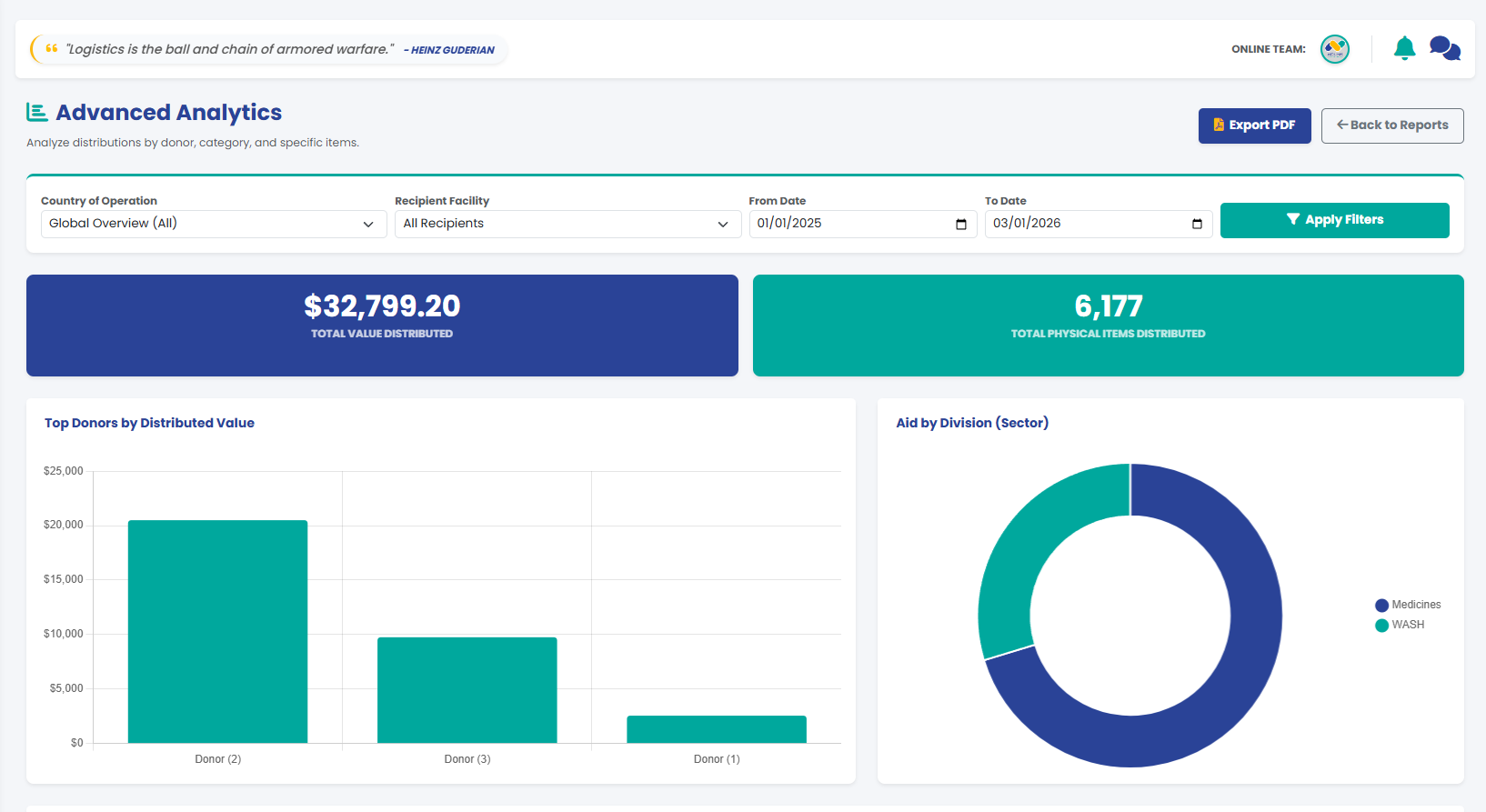
A comprehensive reporting suite provides specialized views for Financial tracking, Stock Levels, Logistics Distributions, and Advanced Analytics.
5. Core System Features & Strategic Rationale
A. Overcoming the Spreadsheet: The Live Centralized Ledger
- Technical Capability
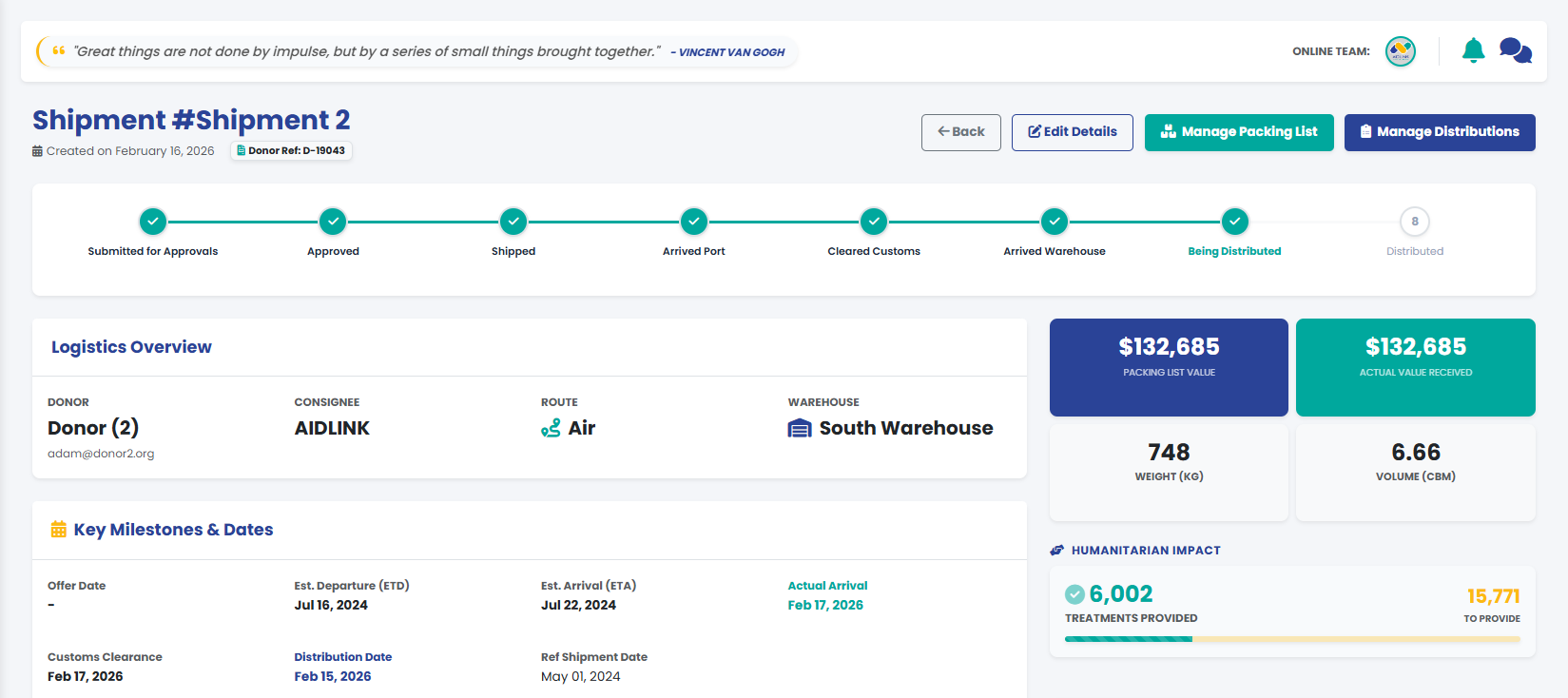
The application moves organizations away from static documents by leveraging a cloud-hosted relational database that automatically compiles data. It instantly monitors overall weight, volume, and item-level discrepancies. - Strategic Rationale
Central headquarters and regional field staff access the identical real-time dataset, guaranteeing that vital supply chain choices rely on factual accuracy rather than obsolete email attachments.
B. Real-Time Team Collaboration & Crisis Coordination
- Technical Capability
The software includes a built-in, real-time communications module enabling users to browse a team directory and open floating chat windows. Furthermore, specific shipments feature dedicated commenting sections for context-rich discussions. - Strategic Rationale
Centralizing communication removes the need for third-party tools like WhatsApp. Logistical discussions, issue resolution, and operational directives are permanently linked to the platform, offering a fully auditable trail for important decisions.
C. Intelligent Notification & Alerting Engine
- Technical Capability
The application uses asynchronous AJAX polling to constantly monitor for unread messages and urgent system notifications, immediately updating interface badges and firing audio cues without needing page refreshes. - Strategic Rationale
Because delays in crisis logistics can cost lives, the proactive notification engine guarantees that supervisors are instantly alerted when their approval is needed, removing workflow bottlenecks.
D. Field-Optimized Data Ingestion (Mobile Scanning)
- Technical Capability
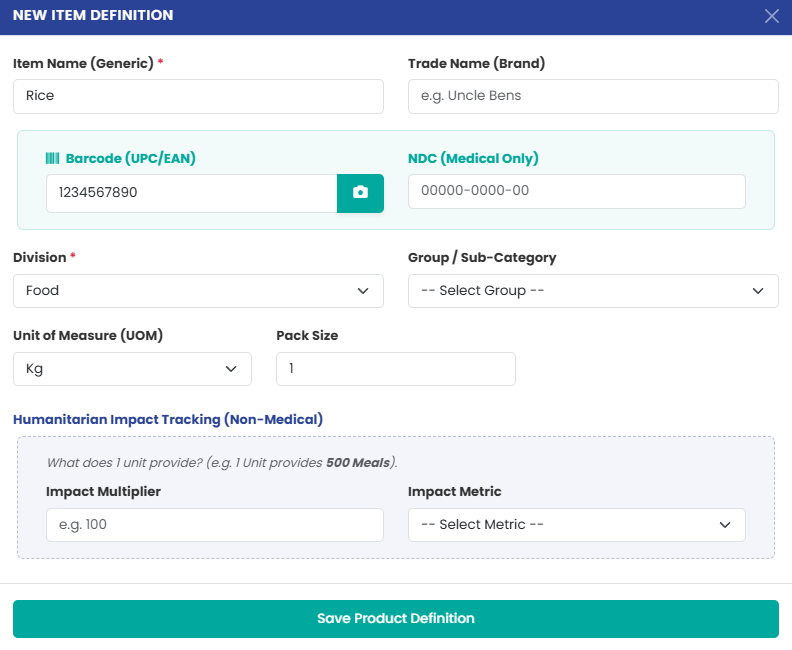
An HTML5 camera scanner is integrated straight into the user interface and linked via AJAX to the central product database. Field personnel can scan UPCs or Medical NDC codes to instantly pull up product details. - Strategic Rationale
This speeds up inventory processing in high-pressure crisis settings and drastically cuts down on the manual entry mistakes often seen when logging complex pharmaceutical terms.
E. Dynamic Logistics & Pipeline Visualization
- Technical Capability
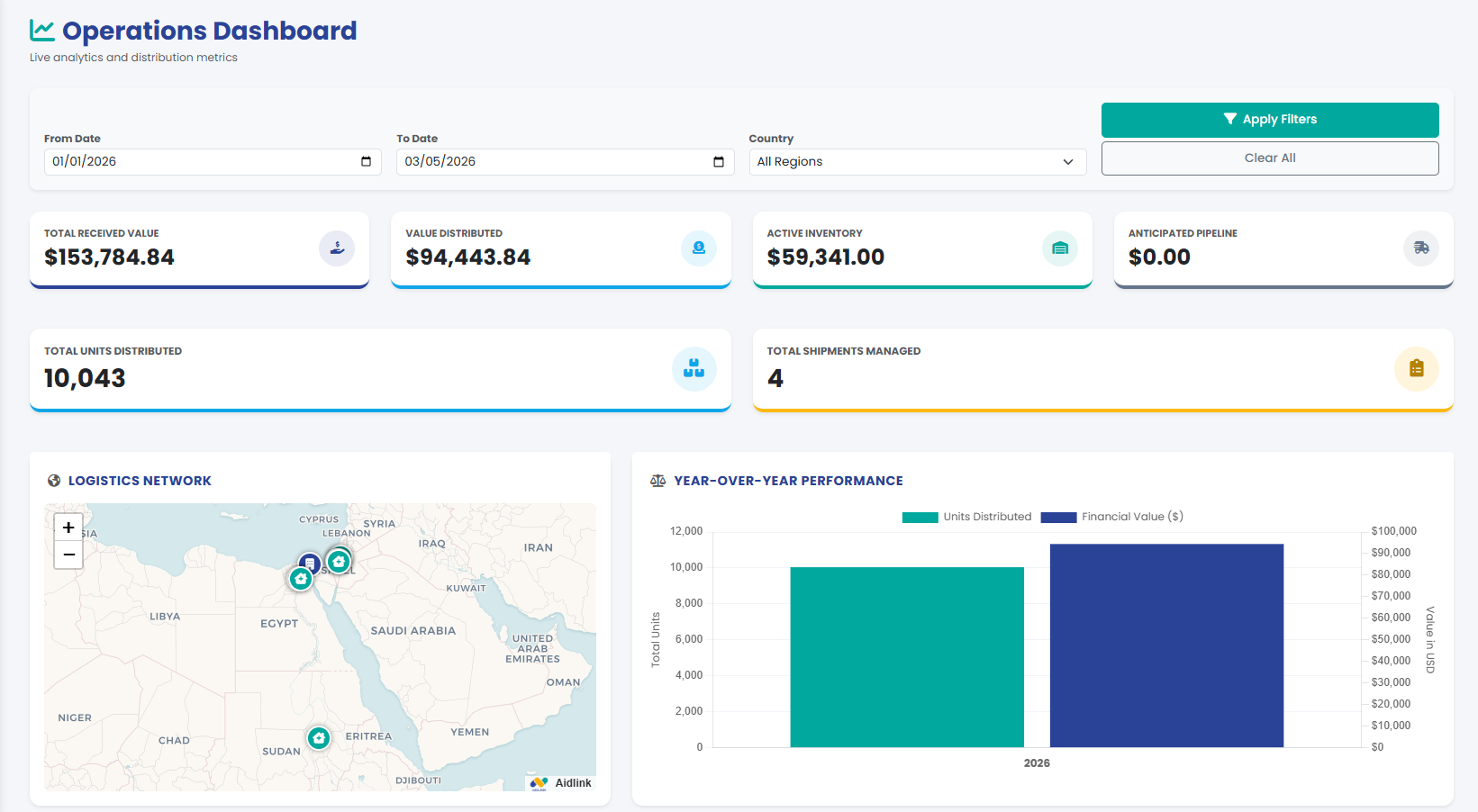
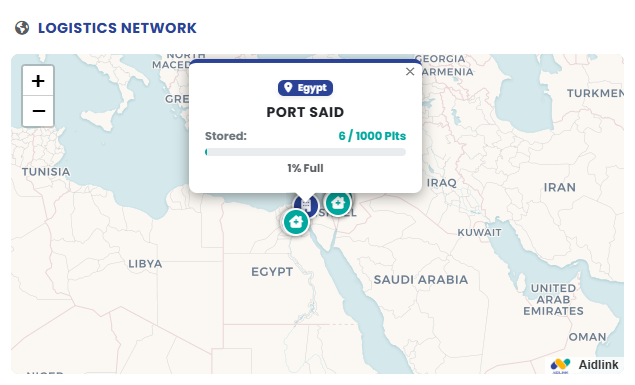
The main dashboard utilizes CartoDB Voyager maps to visualize active logistical centers and recipient health clinics. Interactive map pins show live data concerning maximum storage limits, currently used space, and anticipated incoming shipments. - Strategic Rationale
This allows for proactive supply chain oversight. Leadership teams can visually spot upcoming warehouse capacity issues and dynamically divert inbound convoys to alternative locations.
F. Adaptive Regulatory Checklists
- Technical Capability
The shipment generation screen uses dynamic logic to display specific legal documentation requirements based on the chosen destination (for example, selecting a specific area triggers fields for MoH approvals, whereas selecting other areas triggers fields for customs and FDA). - Strategic Rationale
This serves as an automated compliance safeguard, making sure logistics officers obtain and record all required government permits before dispatching goods, which helps prevent expensive border denials.
Ready to Transform Your Humanitarian Logistics?
Experience the power of Aidlink IMS firsthand. Book a personalized demo with our team today and discover how we can help secure your supply chain and amplify your donor impact.